

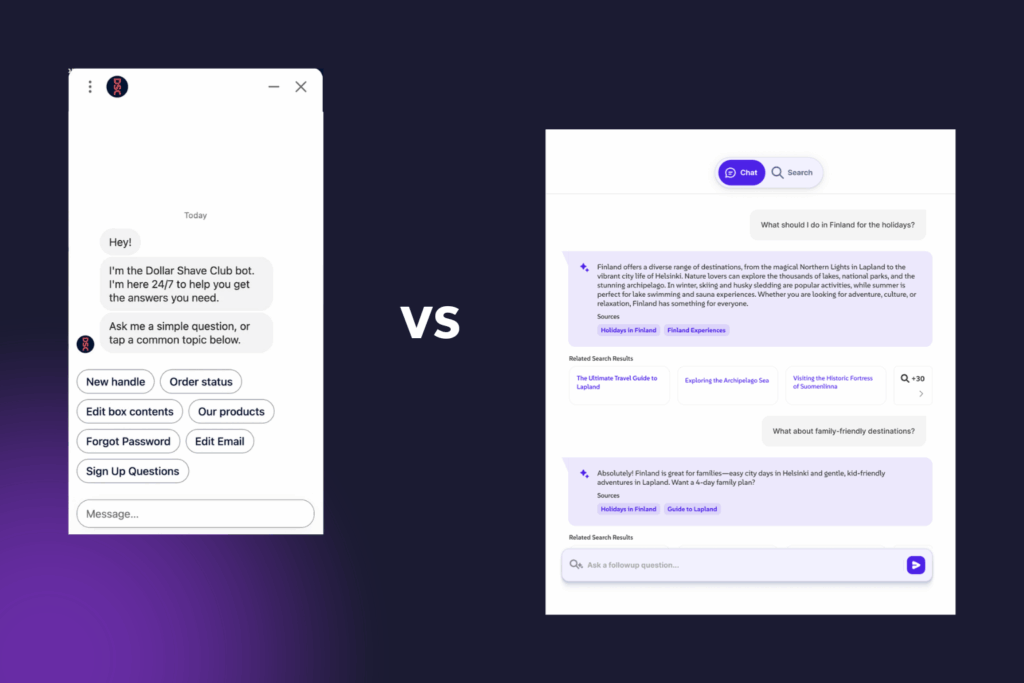
You’ve probably experienced this: you type a question into a website’s chat widget, only to receive a robotic response that doesn’t quite answer what you asked. After clicking through a few menu options, you give up and search for a phone number instead. This frustration highlights a critical distinction in how businesses handle digital conversations and why that difference matters for your users.
The terms “chatbot” and “conversational AI” often get used interchangeably, but they represent fundamentally different approaches to customer interaction. Understanding this distinction isn’t just semantic hairsplitting. It’s the difference between offering your visitors a rigid script and providing them with genuinely helpful, context-aware assistance.
The Traditional Chatbot: Rule-Based and Limited
Traditional chatbots operate on predefined rules and decision trees. Think of them as sophisticated flowcharts: if a user types X, respond with Y. While this approach worked adequately for simple, predictable interactions, it quickly breaks down when faced with the complexity of real human communication.
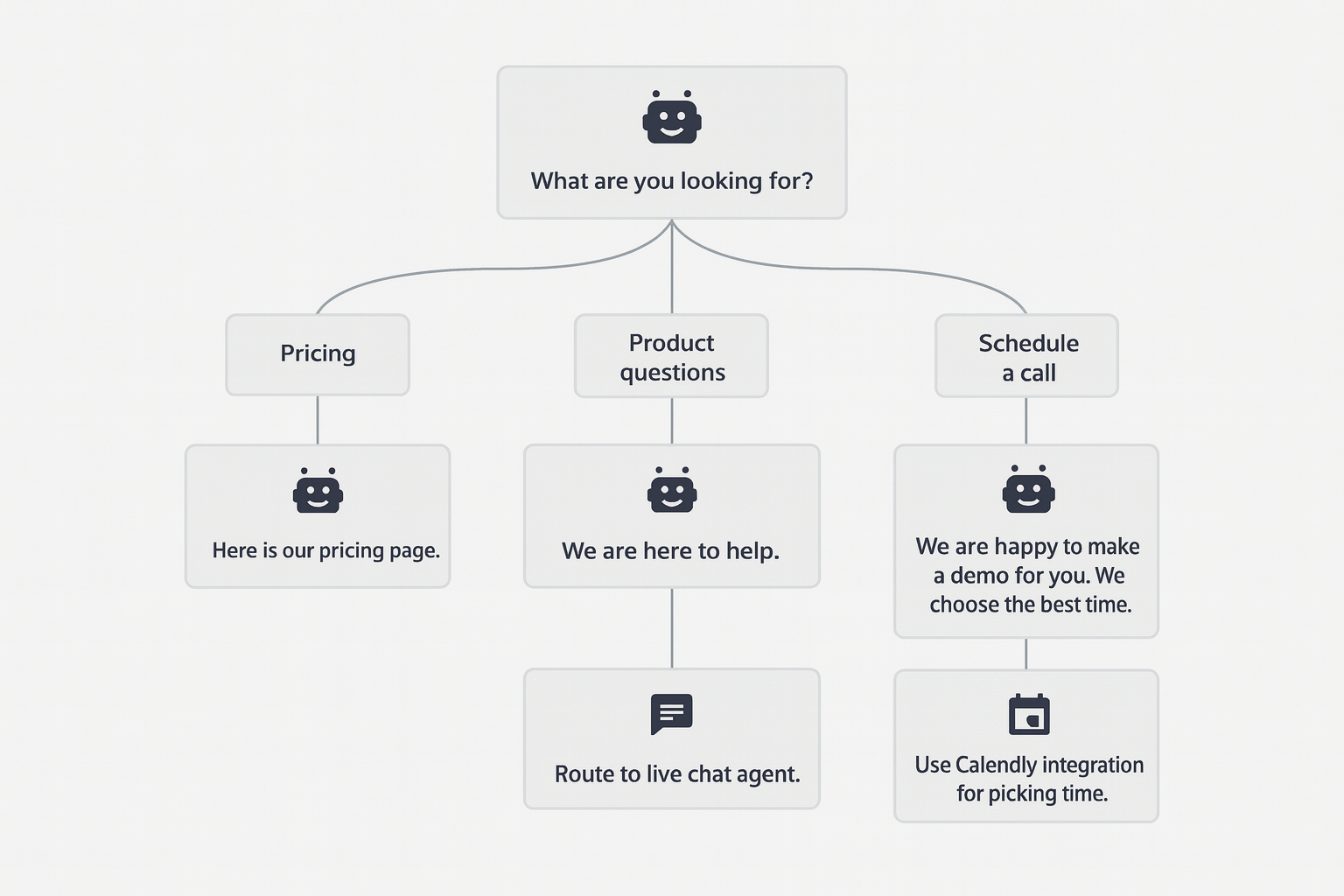
These systems typically rely on keyword matching and pattern recognition. When someone asks “What are your business hours?” the bot recognizes “business hours” and delivers a scripted response. But phrase that same question slightly differently “When do you close on Fridays?” and the bot might struggle to connect the dots.
The limitations become apparent quickly:
- Inability to handle variations in phrasing
- No understanding of context or conversation history
- Frustrating loops when users deviate from expected paths
- Limited ability to learn from interactions
- Difficulty managing multi-topic conversations
Conversational AI: Context-Aware and Intelligent
Conversational AI represents a fundamental shift in how machines understand and respond to human language. Rather than following rigid scripts, these systems use natural language processing and machine learning to comprehend intent, context, and nuance.
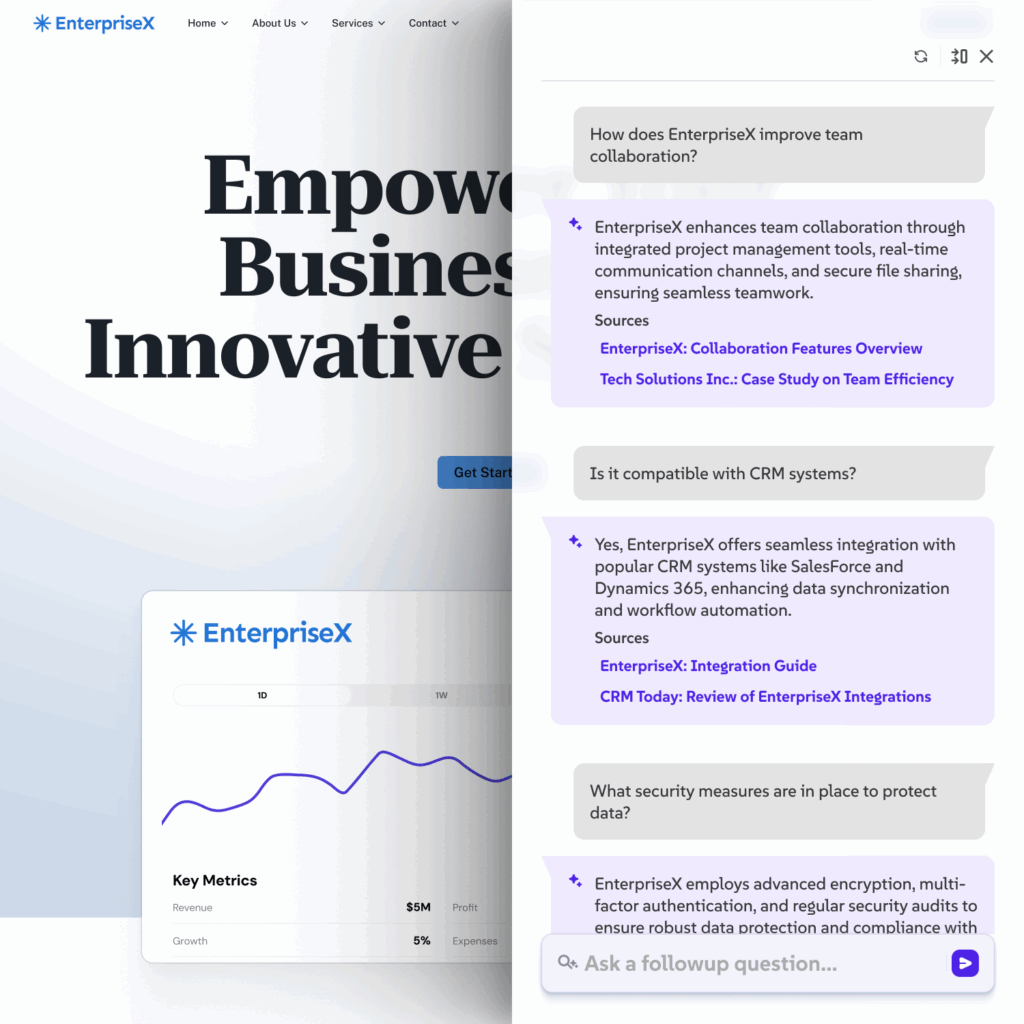
The key difference lies in understanding. When you ask a conversational AI system about shipping times, it doesn’t just match keywords but also it grasps what you’re actually trying to accomplish. If you follow up with “What about international orders?” it understands that “international” refers back to shipping, maintaining conversational context across multiple exchanges.
This technology processes language the way humans do, recognizing synonyms, handling typos, and interpreting questions phrased in countless different ways. It learns from each interaction, continuously improving its ability to provide relevant, accurate responses.
How Conversational AI Works
Modern conversational AI combines several sophisticated technologies:
Natural Language Understanding (NLU) breaks down user input to identify intent and extract meaningful entities. When someone asks “Do you have waterproof hiking boots in size 10?” the system identifies the product category (hiking boots), specification (waterproof), and size requirement.
Context Management maintains awareness throughout the conversation. If the next question is “What colors do those come in?” the AI knows “those” refers to the waterproof hiking boots in size 10 mentioned previously.
Machine Learning enables the system to improve over time. By analyzing successful and unsuccessful interactions, conversational AI adapts its responses and better anticipates user needs.
Natural Language Generation creates responses that sound human and contextually appropriate, rather than pulling from a database of canned replies.
Real-World Impact: Beyond Basic Automation
The practical differences between chatbots and conversational AI become clear when you examine how they handle real user scenarios.
Higher Education
Universities face unique challenges with diverse audiences; prospective students researching programs, current students seeking campus resources, parents asking about financial aid, and alumni looking for continuing education options. A traditional chatbot might answer “What are your admission requirements?” with a generic link to the admissions page.
Conversational AI understands context and audience. When a prospective student asks “What kind of financial aid is available for out-of-state transfer students?” it recognizes multiple layers: transfer status, residency, and financial aid; and provides relevant, specific information. If the conversation continues with “What about scholarships for engineering majors?” the system maintains context, understanding this relates to the same prospective transfer student scenario.
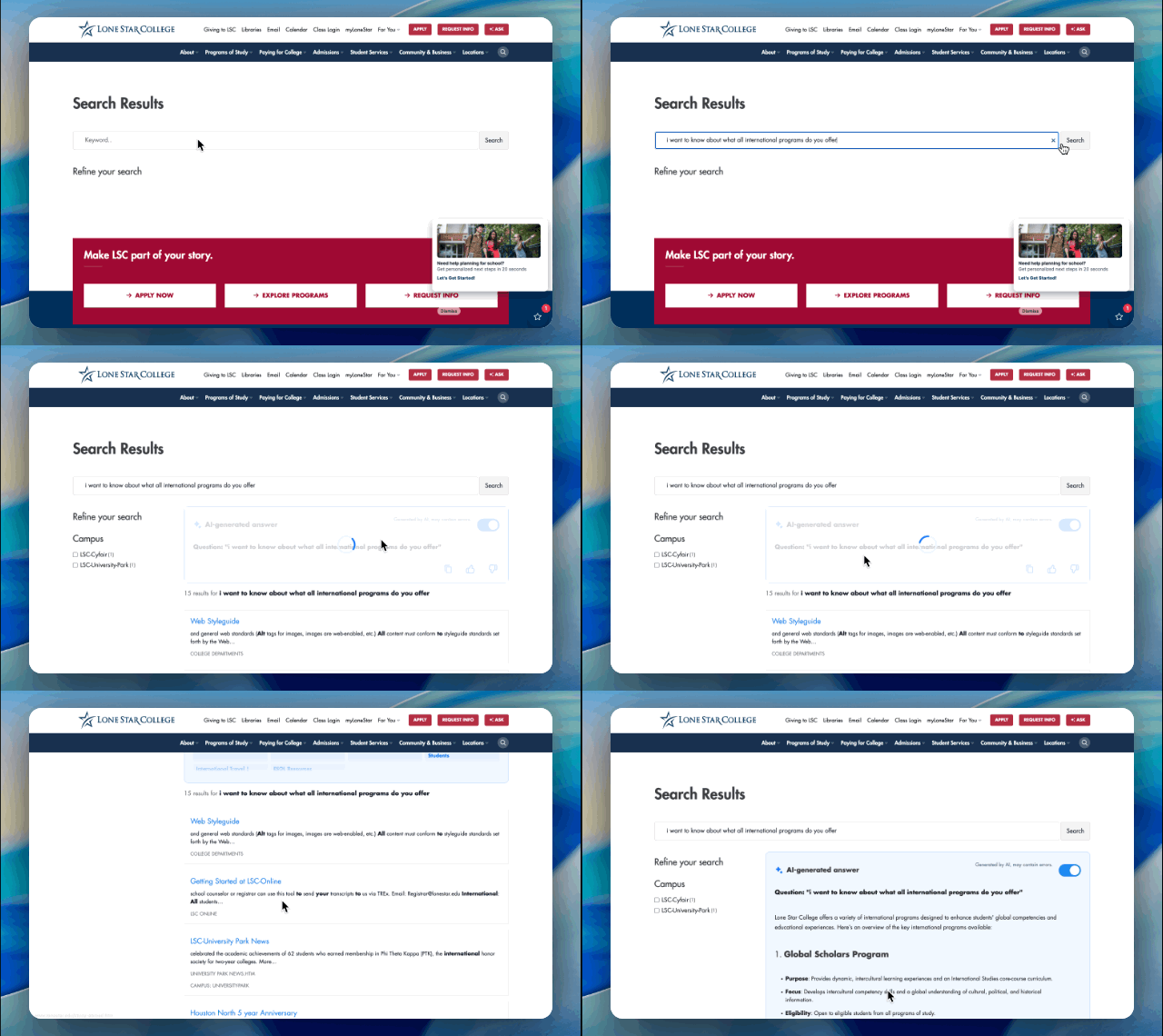
This technology also handles the complexity of academic calendars, registration processes, and program-specific requirements without forcing users through rigid decision trees. Students can ask questions the way they naturally think about them, whether that’s “When do I need to declare my major?” or “Can I take summer classes at another school?”
Professional Associations
Associations serve members with varying levels of engagement and diverse needs—from certification requirements to event registration to advocacy updates. Traditional chatbots struggle with the nuanced, relationship-based nature of membership organizations.
Conversational AI excels at helping members navigate complex membership benefits. When someone asks “How do I maintain my certification?” the system can identify which specific certification they hold, explain continuing education requirements, and guide them to approved courses—all within a single conversation.
Member portals often contain extensive resources that go underutilized simply because members don’t know how to find what they need. Conversational AI breaks down these barriers, helping members discover networking opportunities, access industry research, or understand policy positions without needing to know the exact organizational structure or terminology.
The technology also supports the volunteer-driven nature of many associations, helping chapter leaders find governance documents, event planning resources, or communication templates through natural conversation rather than complex navigation paths.
B2B Manufacturing
Manufacturing companies face distinct challenges in digital communication. Their audiences range from engineers seeking technical specifications to procurement professionals comparing products to existing customers needing support documentation. The information is often highly technical, with industry-specific terminology and complex product relationships.
A basic chatbot might retrieve a product datasheet when asked, but it can’t handle the nuanced questions that drive B2B purchasing decisions. Conversational AI understands queries like “Which valve is compatible with high-temperature steam applications up to 600 PSI?” and can factor in multiple technical parameters simultaneously.
When a customer asks “Do you have something similar to the X-series but with better corrosion resistance?” conversational AI comprehends the comparison request, understands product attributes, and can suggest relevant alternatives while explaining the trade-offs. This mirrors how a knowledgeable sales engineer would approach the question.
The technology also bridges the gap between technical and non-technical users. When a procurement manager asks “What’s the lead time difference between standard and custom configurations?” the system provides clear answers without requiring them to understand every engineering detail. Meanwhile, when an engineer needs torque specifications or material certifications, it can deliver precise technical data from the same conversation interface.
E-commerce Applications
A traditional chatbot might help users navigate to product categories or check order status—but only if they ask in the exact right way. Conversational AI can handle complex product inquiries, understand comparative questions like “Which laptop is better for video editing?” and even guide users through troubleshooting without requiring them to follow a predetermined script.
Healthcare and Wellness
In healthcare contexts, the stakes are higher. A rule-based chatbot might schedule appointments and provide basic information. Conversational AI can understand symptoms described in casual language, ask relevant follow-up questions, and direct patients to appropriate resources—all while maintaining HIPAA compliance and handling the nuances of medical terminology.
Financial Services
Banks and financial institutions use conversational AI to help customers understand complex products, track spending patterns, and get personalized financial advice. Unlike simple chatbots that might only retrieve account balances, these systems can explain transactions in context, identify unusual spending, and suggest relevant services based on conversational cues.

The Technical Foundation: What Powers the Difference
Understanding the technical architecture helps clarify why conversational AI delivers superior experiences.
Traditional chatbots typically use finite state machines or decision trees. Each user input triggers a predetermined transition to the next state, following a rigid path through possible interactions. This works fine for linear processes like password resets but fails when conversations become dynamic.
Conversational AI employs neural networks trained on massive datasets of human conversation. These models learn patterns in how people actually communicate—including slang, idioms, incomplete sentences, and contextual references. The system doesn’t just match patterns; it builds a probabilistic understanding of what users mean and what information would most helpfully address their needs.
This foundation enables several critical capabilities:
Intent Recognition identifies what users want to accomplish, even when expressed ambiguously. “I need help with my bill” might mean viewing a statement, disputing a charge, or setting up a payment plan—conversational AI can ask clarifying questions naturally.
Entity Extraction pulls relevant information from unstructured input. From “I need to fly to Chicago next Tuesday morning,” the system extracts destination, date, and time preference without requiring structured form fields.
Dialogue Management handles multi-turn conversations, tracking topics and maintaining coherence across extended interactions. Users can switch subjects, return to previous topics, or explore tangential questions without losing the thread.
Implementation Considerations: Choosing the Right Approach
Not every business needs the full sophistication of conversational AI. The choice depends on your specific use case, user needs, and business objectives.
Traditional chatbots still make sense for:
- Very simple, high-volume queries with predictable patterns
- Situations where strict compliance requires scripted responses
- Organizations with limited technical resources or budget constraints
- Use cases where conversational flexibility isn’t necessary
Conversational AI becomes essential when:
- Users need help with complex, multi-step processes
- Questions vary widely in phrasing and intent
- Context from previous interactions matters
- You’re handling industry-specific terminology or technical topics
- User satisfaction and experience are competitive differentiators
The transition from basic chatbots to conversational AI doesn’t have to be all-or-nothing. Many organizations start with AI-powered assistance for their most common or complex queries while maintaining simpler automation for straightforward tasks.
The Future of Digital Conversations
The evolution from chatbots to conversational AI reflects a broader shift in how businesses think about digital interaction. Users increasingly expect online experiences that feel natural and helpful rather than robotic and constraining.
Emerging developments point toward even more sophisticated capabilities:
Multimodal Interaction will combine text, voice, and visual elements. Users might show a picture of a product defect and describe the issue verbally, with the AI understanding both inputs together.
Emotional Intelligence will enable systems to recognize frustration, confusion, or urgency in user communication and adjust responses accordingly.
Predictive Assistance will anticipate user needs based on context and behavioral patterns, offering help before users even ask.
Seamless Handoffs will transition smoothly between AI and human agents, with full context transfer ensuring users never repeat information.
These advances will blur the line between automated assistance and human support, creating experiences that leverage the scalability of AI with the empathy and judgment of human experts.
Making Conversations Work for Your Users
The distinction between chatbots and conversational AI ultimately comes down to user experience. Are you helping visitors accomplish their goals efficiently, or are you putting them through a rigid question-and-answer process that tests their patience?
Modern users don’t care about the technical classification of your system. They care about whether they can get answers quickly, whether the interaction feels natural, and whether they’re actually helped rather than just processed.
AddSearch’s AI Conversation brings the power of true conversational AI to your website, understanding your content and helping users find what they need through natural dialogue. Rather than forcing visitors through menus and categories, it engages with them the way a knowledgeable assistant would—understanding questions, maintaining context, and delivering relevant answers drawn directly from your site.
Experience the Difference
The gap between basic chatbots and sophisticated conversational AI continues to widen as user expectations evolve. Visitors increasingly judge digital experiences against the best interactions they’ve had anywhere online—and rigid, rule-based systems fall short of that standard.
If you’re ready to move beyond the limitations of traditional chatbots and offer your users genuinely helpful conversations, AI Conversations can transform how people interact with your content. Book a demo to see how conversational AI adapts to your specific content and helps your visitors find exactly what they need—no scripted paths required.
