


TL;DR
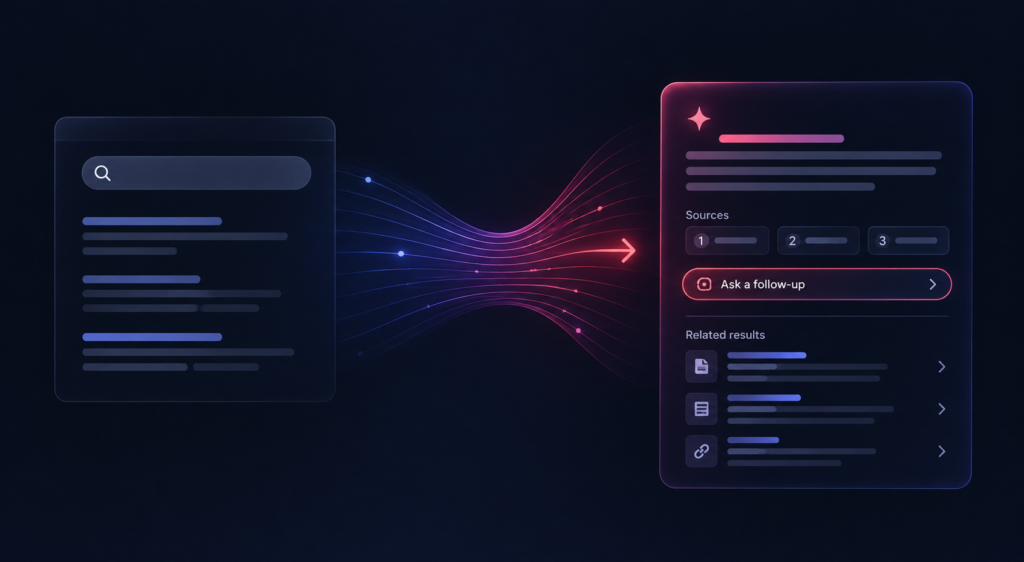
- AI is an interactive layer on top of search, not a replacement. The machinery underneath is largely the same, but people now search in full conversations instead of keywords.
- The overhyped idea is that GEO and AEO replace SEO. They do not. Rankings are still the biggest influence on whether you show up in AI answers.
- The underrated work is the boring part: being accessible to bots, fast to load, and structured so that a single paragraph can be retrieved and understood on its own.
- Content strategy is moving from volume to differentiation. Mediocre coverage is now free inside the model. First-hand insight, proprietary data, and useful interactive content are what still earn citations.
- The one thing to fix this quarter needs no tool: write down ten questions a customer asks before buying, run them through ChatGPT, Claude, and Google AI Mode, and see whether and how your brand shows up.
This article is built on the first episode of Beyond The Search Box, our newest interview series with marketing leaders and operators. Our guest was Matthias Lugert, CEO of Seobility, an all-in-one SEO platform. Seobility says it has around 800,000 registered users and audits millions of websites and tracks millions of keywords every day, which puts the team in the middle of how AI is reshaping search.
The Shift from Search to Answers, in Plain Terms
For years, the pattern was simple. You typed a query, you scanned a list of blue links, and you clicked. The shift now underway is that people increasingly ask a question and expect an answer immediately, often without leaving the AI tool they started in.
Matthias framed it in a way worth sitting with: “AI did not replace search, but it’s an interactive intelligent layer on top of it.” After an early Wild West phase, AI answers are increasingly grounded in the same search index data that produced those blue links. The links did not disappear. They became the source material the answer is built from.
What did change is behavior. As Matthias put it, “we went from a keyword to maybe a longer tail keyword to now complete conversations.” A larger part of the discovery journey now happens inside AI chat interfaces rather than on your website.
There is a limit to that shift, and it matters. When you have something specific to offer, a product, a service, or something genuinely unique, “the ultimate destination is still a website.” The exploration path changed. The internet did not go away.
What’s Overhyped: GEO and AEO as a Replacement for SEO
The moment AI answers became mainstream, a new category of expert appeared almost overnight, promising that GEO or AEO was the only game left and that SEO was finished.
Matthias has been in the industry long enough to be skeptical of that: anything easily manipulated is not sustainable. Many of the early reverse-engineering tactics were, in his words, “clearly dangerous to website owners,” and that risk was rarely disclosed by the people selling the tactics.
The correction has already happened. Even vendors who sell AI answer tracking have quietly changed their language back to a familiar message: SEO is still the most important fundamental to get right. So the overhyped claim was never that new strategies exist. It was that nothing from before counts anymore. It still counts.
What’s Underrated: The Boring Part
The underrated work is unglamorous, which is exactly why it gets skipped.
Start with accessibility. “If your content is not accessible to bots or agents in this space now, you can have the best content in the world, you can have the best offers in the world, you will not be cited and you will not be quoted and you will not be found.”
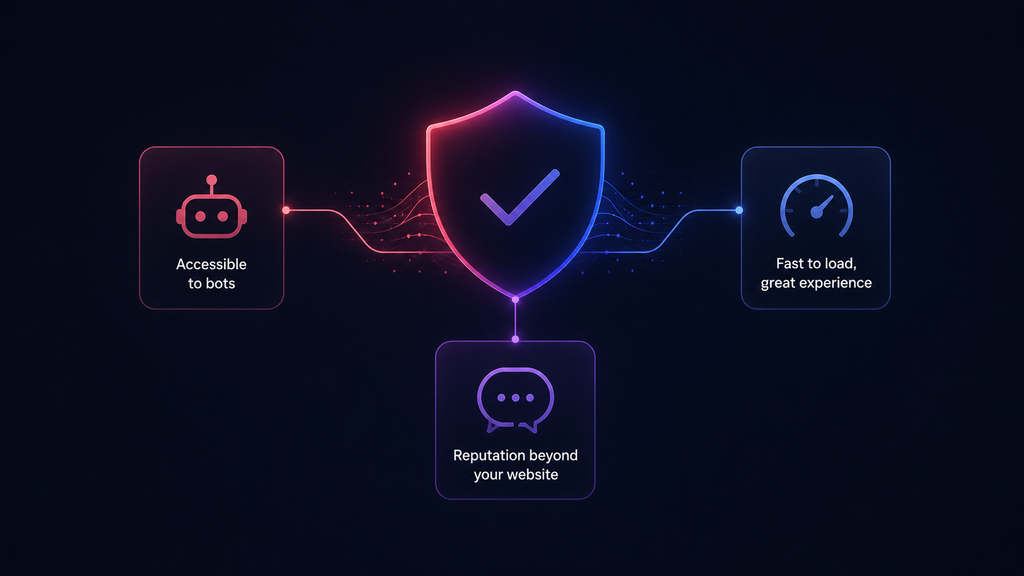
Speed and experience matter for the same reason. If you finally earn the click, whether from a ChatGPT conversation or a blue link, a slow or confusing page loses the outcome you worked to win.
There is a second underrated piece, and it lives off your own site: what is said about your brand when you are not in the room. AI aggregates the whole internet. The reputation you build in places you do not control becomes part of how you are represented.
Writing for Agents, Not Just Humans
This is the practical heart of the conversation, because AI does not retrieve your entire page. It retrieves the parts that answer the question. Matthias named three moves that make your content retrievable.
First, add clear FAQs that are genuine question and answer pairs. Second, put a short, digestible summary at the top of important articles. Third, and most technical, write so that individual paragraphs and even sentences are self-contained. Some people call these chunks. A chunk should carry its own subject and object and all the information needed to stand alone, without depending on the context above it.
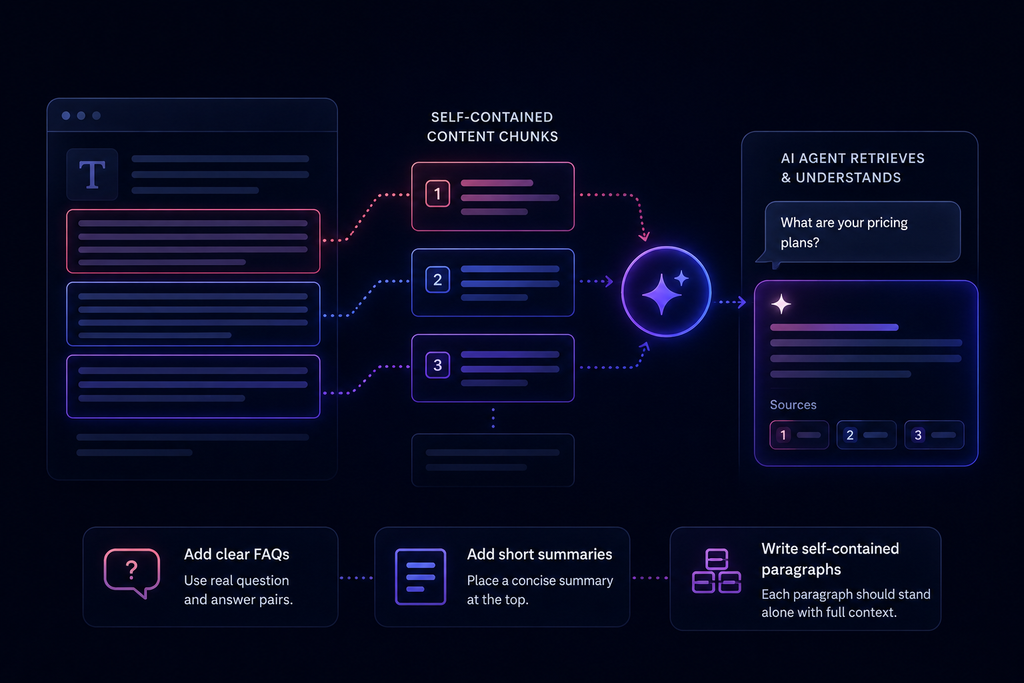
None of this is entirely new. It was already good copywriting. What changed is the stakes. If the passage an AI looks at is incomplete without the surrounding text, it will not work as an answer.
Content Strategy: From Volume to Differentiation
The old content playbook rewarded maximum coverage. Publish enough pages on enough topics and you would rank.
That math has broken. Large models are trained on nearly everything already, which means at least mediocre answers are free and built in. As Matthias said, if you write average content just to cover a topic, “it’s not worth much anymore.”
The shift is from volume to the quality you can uniquely provide. Helpful now means helpful above average, and that comes from things a model cannot generate on its own: first-hand insight from an expert who has actually done the work, proprietary data, or interactive experiences that let a reader explore your information rather than just read it. Build something closer to a product than a wall of text.
One more piece of practical advice: cover the bottom of your funnel more thoroughly than you probably do today.
Which Formats Earn a Place in AI Answers
A few formats have performed particularly well, and one of them comes with a warning.
Listicles worked, which meant they were quickly abused, with brands ranking themselves at number one across hundreds of their own articles. The backlash has started. Matthias described the trap plainly: when a brand publishes a listicle and puts itself in it, search engines can filter out the self-promoting brand. “So what’s left then is you promoting your competitors on rank two.” The safer play is to earn placement in listicles on other sites rather than staging your own.
Comparison pages and “alternative to” pages hold up well, especially when they are tailored to a specific use case or niche instead of staying generic. Unique data helps. So does freshness: keep content current and run real content refreshes.
Measuring Brand Visibility When the Clicks Don’t Come
If you judge everything by clicks, you will miss the part of the journey that now happens inside AI, where you were recommended, or were not, long before any click arrives.
Matthias pointed to a few indicators. Your traditional rankings are still the single biggest influence on whether you appear in AI answers, and they are well understood and easy to measure, so keep ranking. Beyond that, a newer metric matters: how often you are mentioned in the prompts you care about.
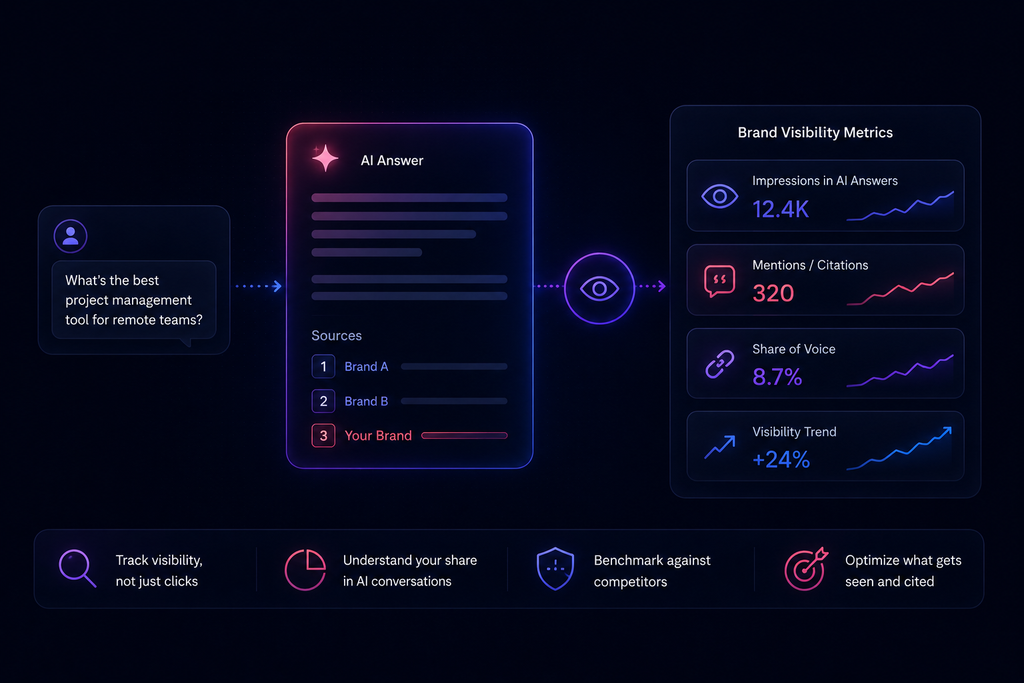
This behaves differently from rank tracking. AI answers are probabilistic. Instead of a stable position one, you might be mentioned 70% of the time, “and that’s a great result.” Because of that variability, you need to look across many prompts and answers over time to read your representation rate reliably.
Consistency is the quiet risk here. If your site says one thing and AI represents your brand differently, that mismatch costs you. Watch which pages get cited as sources, and make sure the story those pages tell is the one you intend.
The One Thing to Fix This Quarter
If you do nothing else, do this, and you do not need a tool for it.
Sit down and write ten questions a customer might ask about your product or brand before they buy. Then type each one into ChatGPT, Claude, or Google AI Mode and read what comes back. Are you included? Is your brand represented accurately? Then look at which pages are cited as the sources feeding those answers, so you can see where the model is getting its information.
That single exercise tells you how AI sees you today, and it points directly at the pages worth improving next.
The through line from the whole conversation is a small correction to advice you already know. For years the rule was write for the user, and it still holds. The update, in Matthias’s words: “let’s acknowledge that agents are also part of the internet now and you have to make sure that you cater to their needs just as well.”
FAQs
Is traditional SEO still relevant with AI search?
Yes. AI answers are increasingly grounded in search index data, and your rankings remain the biggest influence on whether you appear in those answers. New strategies sit on top of SEO fundamentals rather than replacing them.
How do I get my content cited in AI answers?
Make your content accessible to AI crawlers, keep the page fast, and structure it so individual paragraphs stand on their own. Add clear FAQ question and answer pairs, put a short summary at the top of key articles, and include first-hand insight or unique data a model cannot generate itself.
What is the difference between SEO, GEO, and AEO?
SEO is optimizing to rank in search results. GEO (generative engine optimization) and AEO (answer engine optimization) focus on being surfaced inside AI-generated answers. In practice they overlap heavily, because AI answers are grounded in the same signals that drive rankings.
How do I measure my brand’s visibility in AI?
Track your rankings as a leading proxy, then measure how often your brand is mentioned across the prompts that matter to you. Because AI answers are probabilistic, look at your mention rate across many prompts over time rather than a single result.
Beyond The Search Box is AddSearch’s new interview series on how marketers navigate the shift from search to answers. If you want to add a conversational AI layer to your website search, learn more about AddSearch Experience.
