

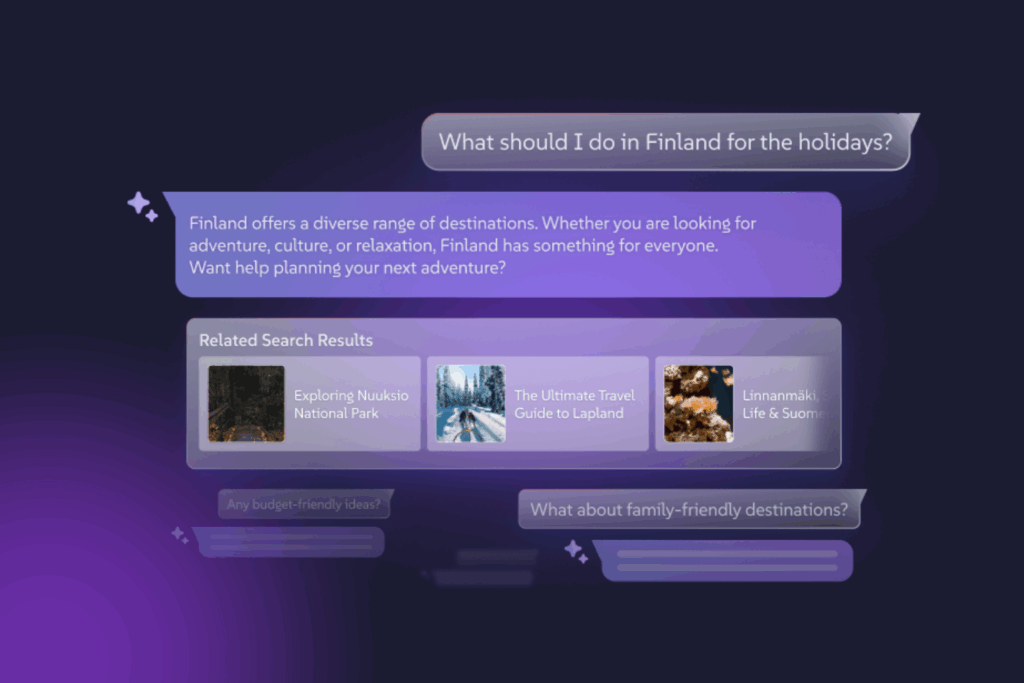
When visitors arrive on a website, they’re usually on a mission. Some want quick answers, others are comparing products, and many are ready to make a purchase decision. Yet research shows that 70% of online businesses fail due to bad usability.
That number is staggering—but it also highlights a clear truth: website navigation is no longer just a usability feature. It’s a revenue driver, a trust signal, and the foundation of user experience.
Why the Way We Search Matters
For decades, navigation has been driven by keyword-based search. Type a phrase, skim through results, and hope the right page appears. But today, user expectations are shifting. People don’t want to think like machines; they expect machines to think like people.
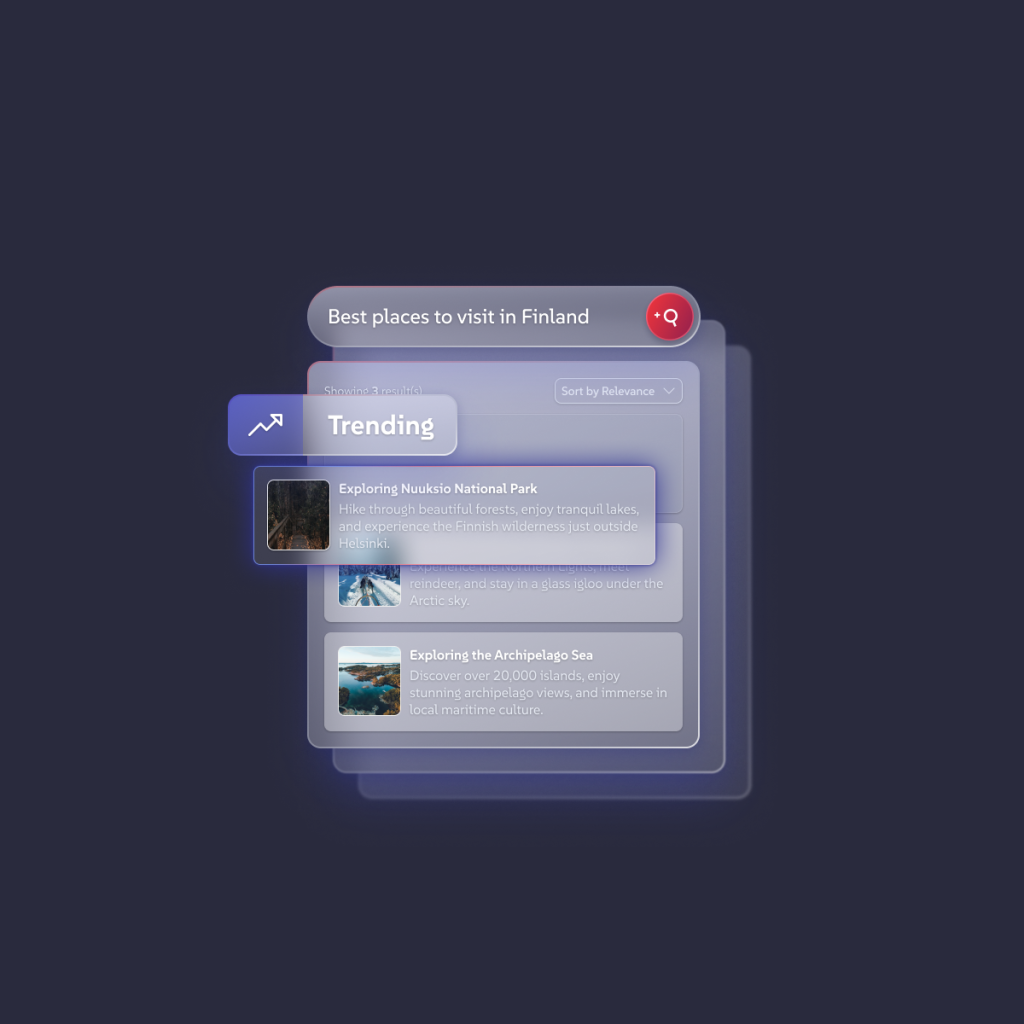
The result? A move away from keyword search toward conversational navigation—where users ask questions naturally and get direct, relevant answers.
The Limits of Keyword Search
Keyword-driven search was revolutionary in its time. It helped websites organize vast amounts of content and gave users a simple way to filter information. But as digital ecosystems grew more complex, limitations became clear:
- Rigid syntax: Users must guess the “right” combination of words.
- Fragmented results: Answers often spread across multiple pages.
- Time drain: Clicking through irrelevant results leads to frustration.
- Lost conversions: 68% of online shoppers will leave a site because of poor search experiences.
In short, keyword search makes users adapt to the system, rather than the system adapting to users.
The Rise of Conversational Navigation
Enter conversational search—powered by AI and natural language processing (NLP). Instead of typing shorthand phrases, users can express intent naturally:
- “How do I return a product I bought online last week?”
- “Which software plan is best for a small business team?”
- “What’s the difference between cloud storage and on-premise?”
Solutions like AI Answers from AddSearch transform these queries into actionable responses. Instead of a long list of links, users get direct, synthesized answers drawn from verified site content.

This shift is more than technological—it’s behavioral. Users feel like they’re engaging in a dialogue, not deciphering a database.
Why Conversations Beat Keywords
1. Speed and Efficiency
Every second matters online. A Google study found that 53% of mobile users abandon sites that take more than 3 seconds to load. The same principle applies to search results: the faster the answer, the higher the retention. Conversational navigation reduces friction by presenting immediate solutions.
2. Clarity and Confidence
Rather than parsing multiple documents, users receive one clear response. This not only boosts confidence but also reduces the likelihood of misinformation from third-party sources.
3. Engagement That Feels Human
When a system understands natural language, users feel acknowledged. That human-like interaction keeps people engaged and builds trust with the brand.
4. Conversion Impact
The smoother the journey, the higher the chance of action. Websites using AI chatbots experienced a 23% higher conversion rate compared to traditional search models.
How Conversational Search Works (In Practice)
At its core, conversational navigation combines three technologies:
- Natural Language Processing (NLP): Understands user intent beyond literal words.
- Contextual Retrieval: Locates the most relevant content across a website.
- Answer Generation: Synthesizes that content into a concise, accurate response.
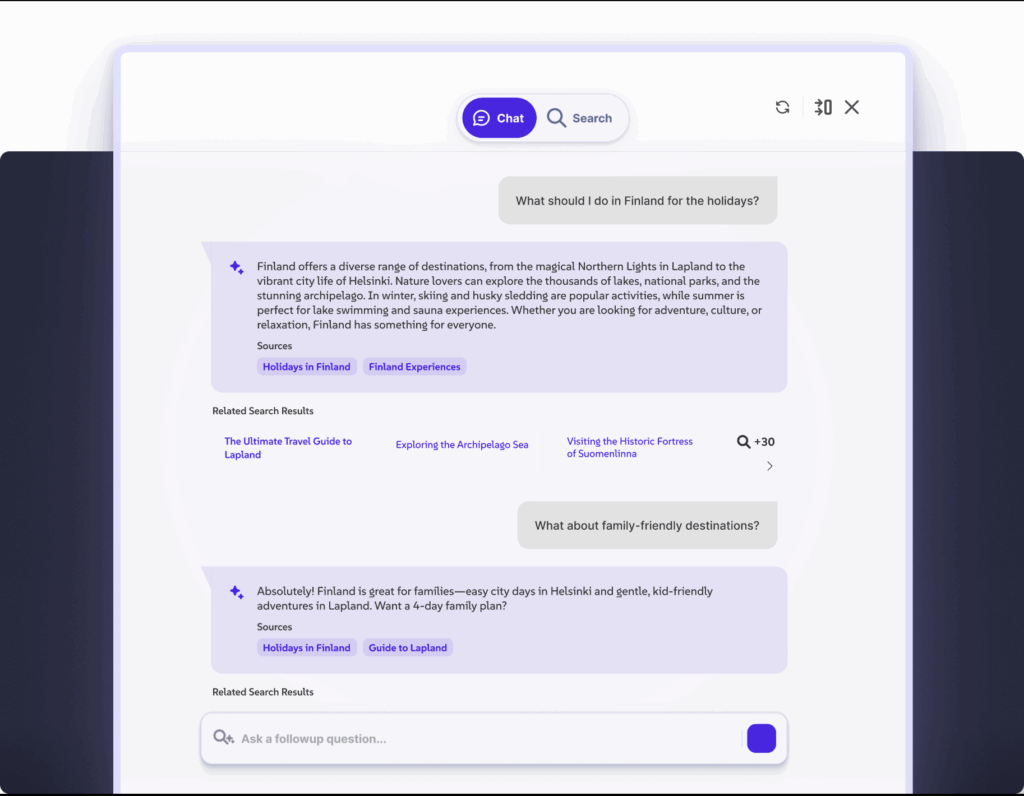
For example, a user asks: “How long does shipping take for international orders?”
- NLP interprets “shipping” + “international” + “timeframe.”
- Retrieval pulls data from shipping policy and FAQ pages.
- AI Answers generates: “International shipping typically takes 7–14 business days.”
The experience feels seamless—almost as if speaking directly with a customer service representative.
Industry Applications
E-Commerce: Turning Questions into Conversions
A customer shopping for running shoes may ask:
“What’s the best option for trail running in wet weather?”
Instead of listing dozens of products, AI Answers provides a curated recommendation with direct links—shortening the purchase journey.
Impact: Fewer abandoned carts, higher order value, stronger brand loyalty.
Higher Education: Simplifying Complex Journeys
Prospective students often navigate sprawling university websites. Instead of searching “scholarships” or “deadlines,” they can ask:
“What scholarships am I eligible for as an international student applying this fall?”
The AI system combines admissions data, eligibility criteria, and deadlines to deliver a clear, personalized answer.
Impact: Reduced confusion, smoother application processes, and higher enrollment rates.
Healthcare: From Symptoms to Scheduling
Patients frequently need quick, accurate information. Asking “How do I book an appointment with a dermatologist near me?” returns actionable next steps, including appointment links.
Impact: Faster patient onboarding, improved satisfaction, and fewer support calls.
SaaS & Technology: Faster Adoption, Lower Churn
For software users, documentation can be overwhelming. Conversational navigation allows queries like:
“How do I integrate this platform with Salesforce?”
AI Answers pulls instructions directly from support documentation, providing step-by-step guidance.
Impact: Increased product adoption, reduced customer support workload, stronger retention.
The Future of Website Navigation
Personalization at Scale
Future systems won’t just answer questions—they’ll tailor responses based on user profiles. Imagine two users asking the same question about pricing. The system could deliver different answers depending on whether the user is a small business owner or an enterprise IT manager.
Multimodal Experiences
Voice, visual, and chat-based navigation will merge with text. Users might snap a product photo and ask, “Do you have something similar?” or use voice to ask, “What’s today’s lunch menu?”
Proactive Assistance
Instead of waiting for input, AI will anticipate needs. A visitor reading about a product may automatically see an AI-powered suggestion: “Would you like to compare this with our premium version?”
Continuous Learning
Every interaction helps refine future results. Over time, AI search becomes smarter, more contextual, and more aligned with user expectations.
Why Businesses Can’t Wait
The shift to conversational navigation isn’t a distant future—it’s happening now. According to McKinsey, companies leveraging AI-powered search see 30% reductions in support costs while improving customer satisfaction scores.
For organizations, the takeaway is simple: failing to evolve means risking user frustration, missed revenue, and falling behind competitors.
Bringing It All Together
The future of website navigation is clear: it’s conversational, personalized, and user-driven. By moving beyond keywords, businesses can transform websites from static information hubs into dynamic experiences that feel intuitive and human.
AddSearch is leading this transformation with AI Answers—delivering natural, conversational experiences that keep users engaged, informed, and converting.
👉 Ready to see how conversational navigation can elevate your website? Join the waitlist to get early access.
