

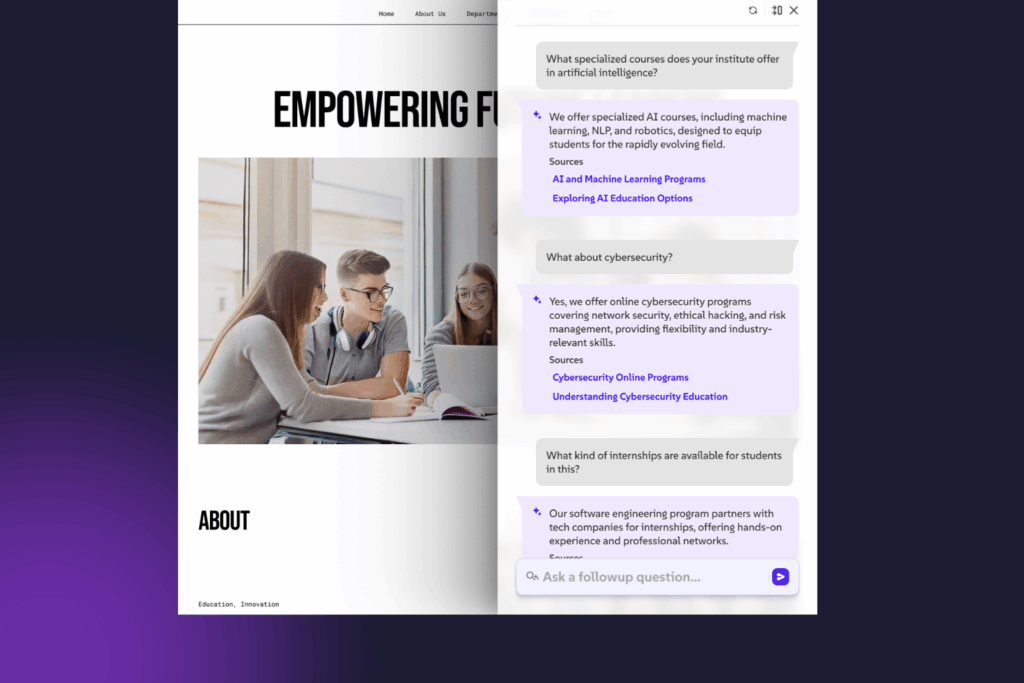
Conversational AI search represents a fundamental shift in how users interact with website content. Unlike traditional keyword-based search that requires users to guess the right terms, conversational AI understands natural language queries, interprets intent, and delivers contextually relevant answers through human-like interactions.
This technology has become increasingly vital across industries. In education, students can ask complex questions about course materials in their own words. Banking customers can navigate financial products by describing their needs rather than knowing product codes. Media organizations help readers discover relevant articles through conversational exploration. Government agencies make public services more accessible by allowing citizens to ask questions naturally, without needing to understand bureaucratic terminology.
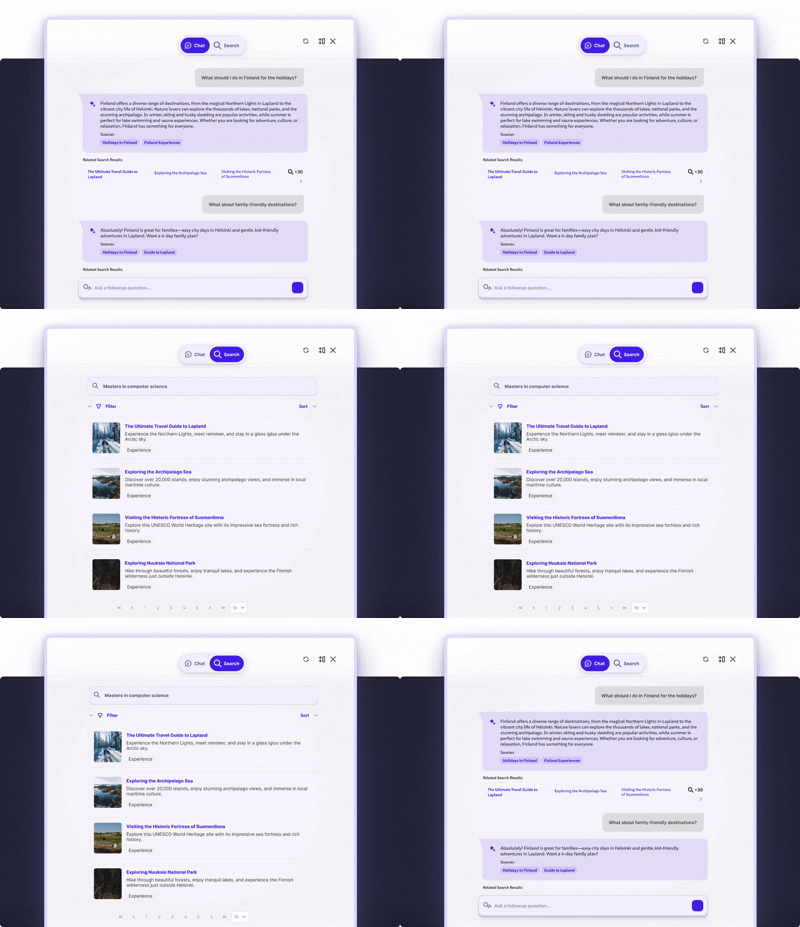
The impact is clear: conversational AI search transforms the user experience from frustrating keyword guessing games into intuitive, helpful conversations.
Why Conversational AI Search Matters
Legacy keyword-based search creates significant friction in the user journey. Users must translate their needs into search-engine-friendly terms, often trying multiple query variations before finding what they need. They encounter irrelevant results, abandoned searches, and the dreaded “no results found” message that sends them to competitors or support channels.
Conversational AI resolves these pain points through natural language understanding. It interprets questions like “What’s your return policy for damaged items?” or “I need help choosing a mortgage” without requiring specific keywords. The system understands synonyms, handles typos, interprets context, and even predicts what users might need next.
Consumer expectations have evolved dramatically. Having experienced sophisticated AI assistants in their daily lives, users now expect websites to understand them just as naturally. They want immediate, accurate answers without navigating complex site structures or learning specialized search syntax. Meeting these expectations isn’t just about staying current—it’s about remaining competitive in an increasingly AI-driven digital landscape.
Essential Best Practices to Optimize Conversational AI Search on Your Website
1. Flexible Design and Easy Iteration
The conversational AI landscape evolves rapidly, and your search solution must keep pace. Prioritize platforms that offer flexibility and adaptability, allowing your team to roll out new features, adjust response patterns, and refine user experiences without extensive development cycles.
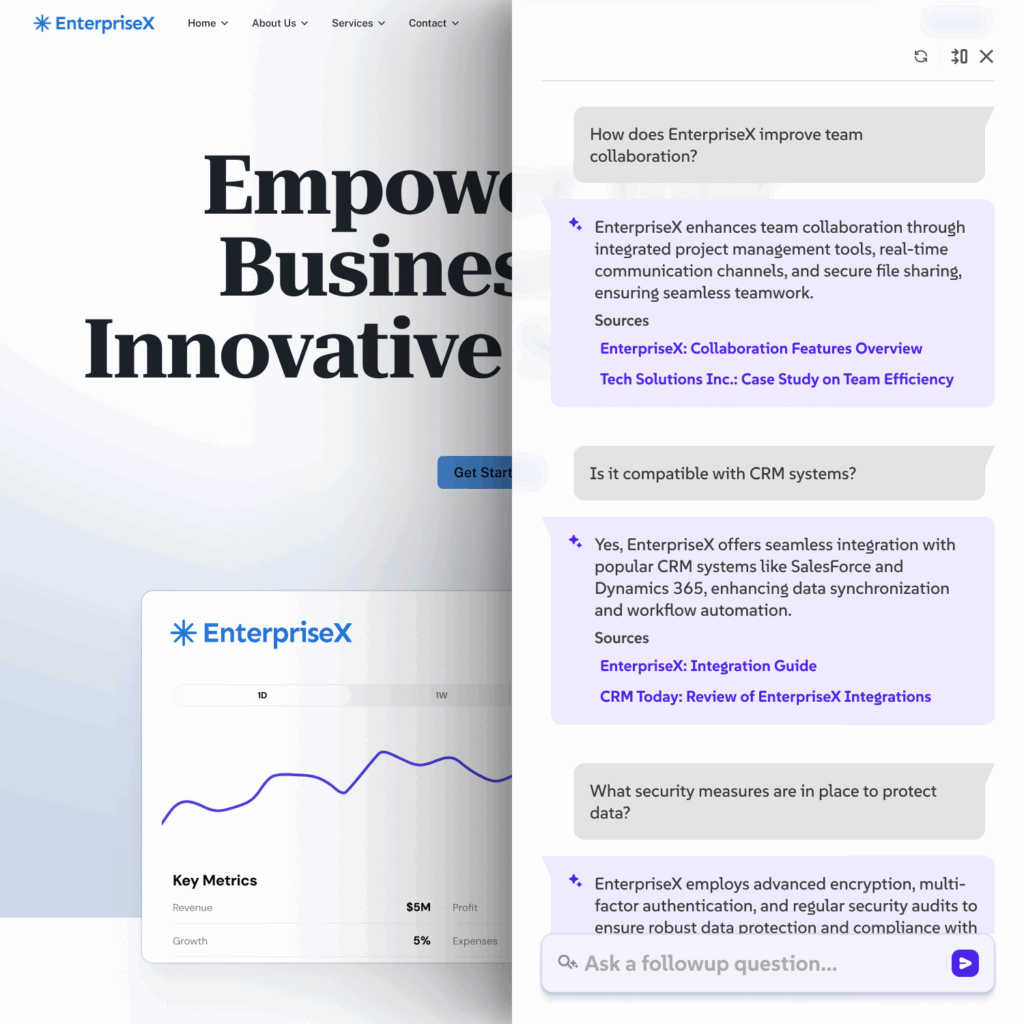
Low-code and no-code solutions empower marketing and content teams to make improvements directly, reducing dependency on engineering resources. This agility enables rapid testing of new conversation flows, quick responses to user feedback, and continuous optimization based on real-world performance. The ability to iterate quickly transforms conversational AI from a static implementation into a living system that grows smarter over time.
2. Context-Aware Experiences
Context separates good conversational AI from great conversational AI. Systems that leverage session data, conversation history, and inferred intent deliver dramatically more relevant results.
Consider a user who previously searched for “investment accounts” and now asks “What are the fees?” A context-aware system understands this refers to investment account fees, not general service fees. By maintaining awareness of the conversation flow, the AI can interpret follow-up questions accurately without requiring users to repeat context with each query.
Session-based context tracking allows the system to remember what the user has already viewed or asked about during their current visit. This enables more natural, flowing conversations where users can ask “tell me more about that” or “what’s the difference between those two?” without ambiguity.
Proactive recommendations take context-awareness to the next level. Rather than waiting for the next query, suggest related content, anticipate follow-up questions, or guide users toward relevant resources based on their current conversation trajectory. This guidance helps users discover information they might not have known to ask about.
3. Emotional Intelligence and Human Touch
Technical accuracy alone doesn’t create satisfying user experiences. Conversational AI must recognize and respond to user emotions appropriately. Integrating sentiment analysis and tone detection allows your system to identify frustration, urgency, confusion, or satisfaction in user queries.
When a user expresses frustration; “This is the third time I’m asking about my order”. The system should acknowledge this emotion, respond with empathy, and prioritize resolution. Conversely, positive interactions can be reinforced with encouraging language. This emotional intelligence transforms transactional interactions into engaging conversations that build brand loyalty.
The human touch extends beyond sentiment to include conversational elements like acknowledgment phrases (“I understand that’s frustrating”), appropriate transitions between topics, and natural language that reflects your brand voice rather than robotic responses.
Transparency, Explainability, and Control
Users should always know when they’re interacting with AI rather than humans. This transparency builds trust and sets appropriate expectations. Clear indicators like “AI Assistant” labels or introduction messages establish this understanding immediately.
Provide system feedback throughout interactions. When processing complex queries, show loading states or “thinking” indicators. When delivering answers, explain the reasoning: “Based on your location in New York…” or “According to our updated policy from March 2025…” This explainability helps users trust and verify the information.
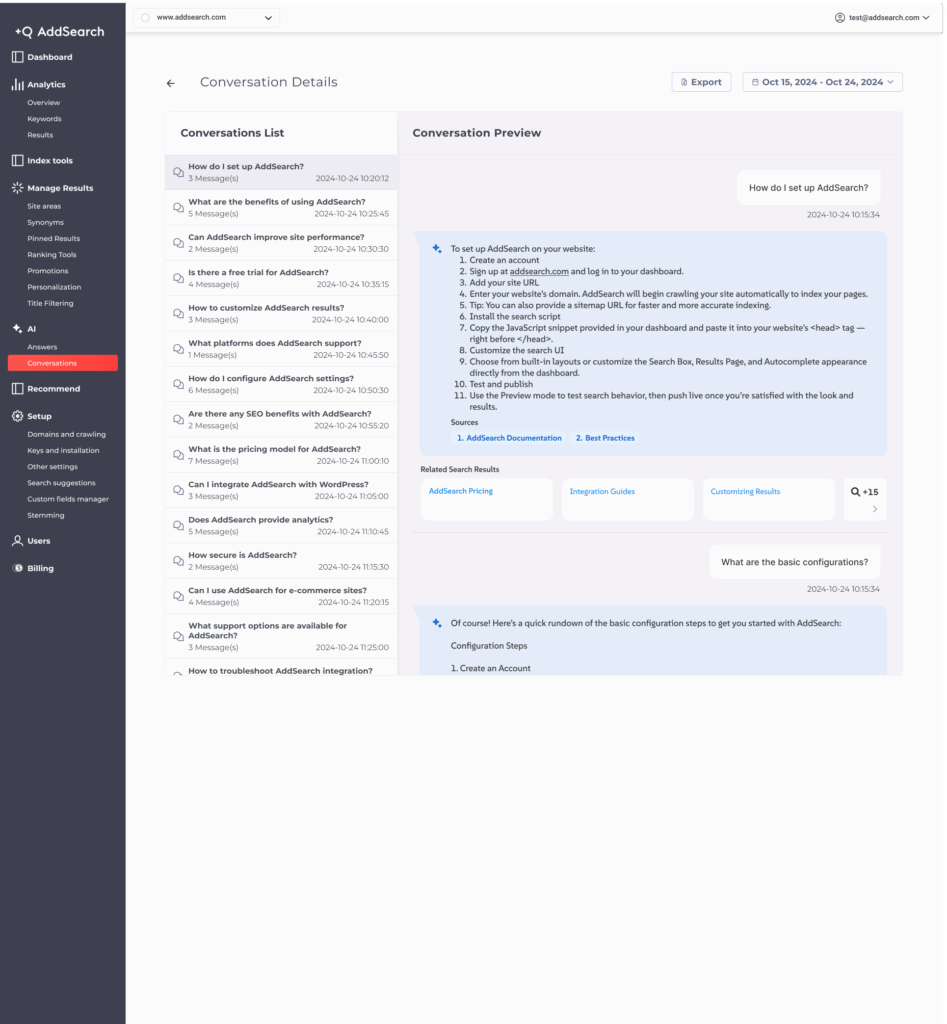
Most critically, always provide clear escalation paths to human assistance. No matter how sophisticated your conversational AI becomes, some situations require human judgment, empathy, or authority. Make it easy for users to request human help, and ensure these handoffs preserve conversation context so users don’t need to repeat themselves.
4. Robust Content Readiness
Even the most advanced conversational AI can only be as good as the content it draws from. Content optimization for AI discoverability requires deliberate preparation and ongoing maintenance.
Start with clean, semantic HTML that clearly structures your content. Use proper heading hierarchies, descriptive lists, and meaningful paragraph breaks. Add comprehensive metadata including page titles, descriptions, and relevant keywords. Implement structured data markup using Schema.org vocabularies to help AI understand your content’s context, relationships, and meaning.
Create content with conversational queries in mind. Include natural language questions and answers, anticipate common user phrasings, and maintain content freshness through regular updates. Remove outdated information that could lead to inaccurate AI responses. Well-prepared content doesn’t just improve AI search. It benefits all your users and traditional search engines too.
5. Continuous Learning and Monitoring
Conversational AI optimization is never truly finished. Implement comprehensive analytics to track query patterns, successful resolutions, abandonment points, and user satisfaction. Monitor which questions go unanswered or produce poor results, identifying content gaps and optimization opportunities.
Actively collect user feedback through ratings, follow-up questions like “Was this helpful?”, and optional comment fields. These direct signals reveal what’s working and what needs improvement. Review error logs and failed queries regularly to understand where your system struggles.
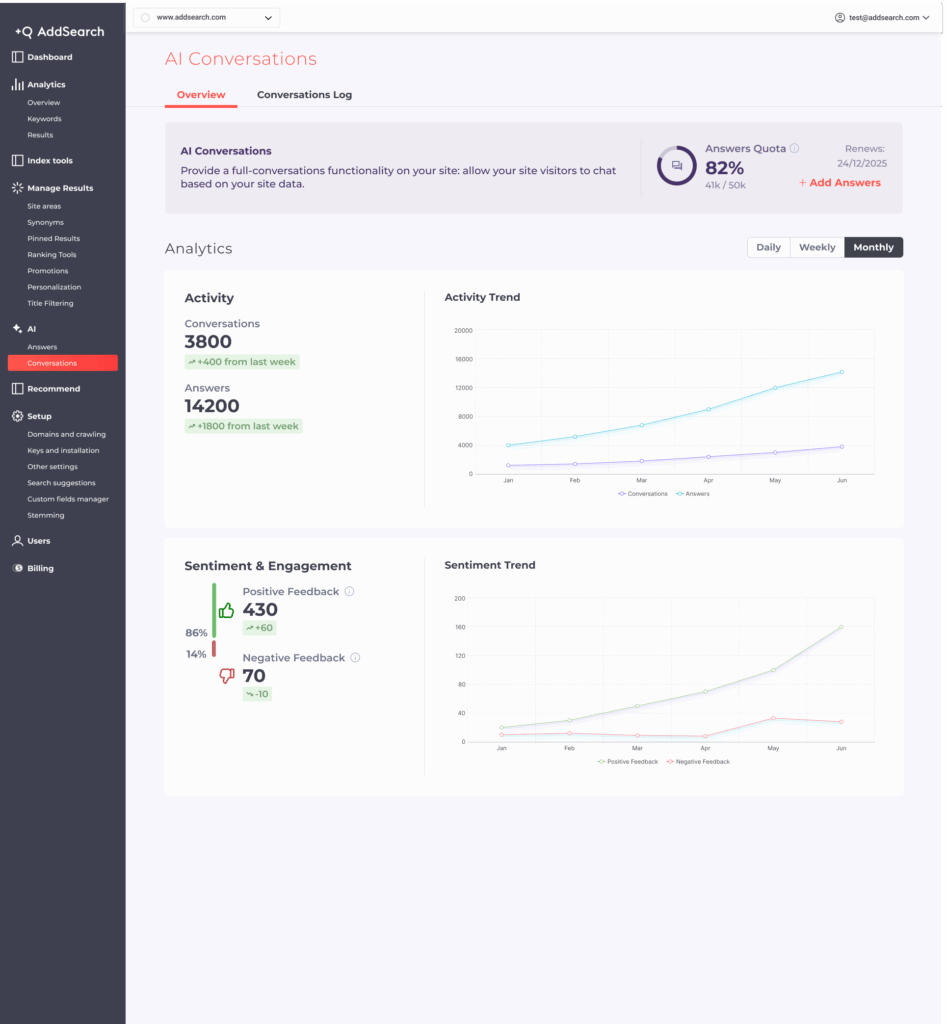
Use these insights to iterate continuously. Expand your knowledge base, refine response templates, adjust confidence thresholds, and improve conversation flows based on real user behavior. Schedule regular review sessions where cross-functional teams analyze performance data and implement improvements. This commitment to continuous learning ensures your conversational AI evolves alongside user needs and expectations.
6. Accessibility and Inclusivity
Conversational AI has tremendous potential to make digital content more accessible, but only when designed inclusively from the start. Ensure your solution works with screen readers and assistive technologies. Provide keyboard navigation alternatives to mouse-dependent interactions.
Design clear, intuitive interfaces that accommodate diverse user needs and preferences. The conversational format itself; allowing users to ask questions in natural language rather than navigating complex menus, inherently improves accessibility for many users.
Consider cognitive accessibility too. Use clear, simple language. Break complex information into digestible pieces. Avoid jargon and provide definitions when specialized terms are necessary. These practices benefit all users, not just those with specific disabilities, creating better experiences universally.
Must-Have Features for AI Search Solutions
When evaluating conversational AI search platforms, certain features separate enterprise-ready solutions from experimental tools.
Faithful answers stand paramount. The system must deliver verified, accurate, and current information without AI hallucinations or fabricated details. Look for solutions with grounding mechanisms that tie responses directly to your source content, with citations or references that allow verification.
Brand customization ensures the conversational experience aligns with your identity. The system should reflect your brand voice, visual design, and unique value propositions. It must handle your unstructured data—PDFs, videos, documents, legacy content—not just clean databases.
Built-in monitoring and analytics provide the visibility needed to manage and optimize performance. Real-time dashboards, query analytics, satisfaction metrics, and conversation logs enable data-driven improvements without building custom reporting infrastructure.
Seamless integration support matters enormously. The solution should connect easily with your CMS, CRM, analytics platforms, and other business systems. API access, webhooks, and pre-built connectors reduce implementation complexity and time-to-value.
Intuitive setup accelerates deployment. Look for solutions that don’t require extensive AI expertise or months of configuration. The faster you can launch and start gathering real user feedback, the sooner you’ll realize value.
Common Pitfalls & How to Avoid Them
Even well-intentioned conversational AI implementations can stumble. Awareness of common pitfalls helps you avoid them.
Blocking AI crawlers represents a critical mistake. Some organizations inadvertently block the crawlers that conversational AI uses to understand and index content, then wonder why the search results are poor. Review your robots.txt files and ensure AI systems can access the content they need to serve your users.
Poorly defined objectives lead to unfocused implementations. Avoid trying to build universal assistants that do everything. Instead, start with specific, high-value use cases. Define clear success metrics. Understand which user needs you’re addressing and design accordingly. You can always expand scope after proving value in targeted areas.
Neglecting user feedback loops creates stagnation. Some teams launch conversational AI, see initial positive results, then fail to maintain momentum. Without proactive improvement based on user feedback, performance degrades as content changes, user needs evolve, and expectations rise. Establish regular review cycles and treat conversational AI as a product requiring ongoing investment, not a project with an end date.
Underestimating content preparation causes many implementations to underperform. Teams focus on AI capabilities while neglecting the content foundation. Remember: the AI amplifies your content quality. Poor content produces poor results, no matter how sophisticated the AI. Invest in content strategy, cleanup, and optimization before and alongside your conversational AI implementation.
The Future of Conversational AI Search
The conversational AI landscape continues to advance rapidly, with several trends shaping the near future.
Conversational filtering will enable users to refine search results through natural dialogue rather than checkbox facets. Instead of clicking category filters, users might say “show me options under $200 with free shipping” and continue refining conversationally.
AI-powered product recommendations will move beyond basic similarity algorithms to understand nuanced preferences expressed through conversation. Users might describe what they’re looking for in natural language, receiving thoughtfully matched suggestions based on the attributes and requirements they’ve expressed.
Conversational commerce agents will guide users through entire purchase journeys, from discovery through checkout, handling questions about specifications, availability, shipping, and returns without leaving the conversation interface.
Enhanced natural language understanding will continue improving, handling more complex queries, understanding nuanced intent, and supporting multiple languages seamlessly.
Integration of real-time data will enable conversational AI to answer questions about current inventory, appointment availability, account status, and other dynamic information that previously required separate system access.
These capabilities represent the evolution from search tools to intelligent assistants that fundamentally transform how users interact with digital properties. Forward-thinking organizations are already exploring these possibilities through platforms like AddSearch’s upcoming AI Conversations product, designed to bring next-generation conversational capabilities to websites across industries.
Conclusion: Key Takeaways & Next Steps
Optimizing conversational AI search requires strategic thinking across multiple dimensions. Success depends on flexible platforms that enable rapid iteration, context-aware experiences that understand conversation flow and user intent, emotional intelligence that creates engaging interactions, and transparent systems that build user trust.
The foundation remains robust content preparation without quality, AI-accessible content, even the most sophisticated system underperforms. Layer on continuous learning and inclusive design to create experiences that serve diverse user populations effectively.
Avoid common pitfalls by ensuring AI crawlers can access your content, defining clear objectives before implementation, establishing feedback loops for continuous improvement, and investing adequately in content preparation. Remember that conversational AI is not a project with an endpoint but an evolving capability requiring ongoing attention and optimization.
The future promises even more sophisticated capabilities that blur the line between search and intelligent assistance. Organizations that build strong foundations now, combining the right technology, content strategy, and optimization practices, will be positioned to adopt these innovations quickly and maintain competitive advantages.
Ready to Transform Your Website Search Experience?
The journey to exceptional conversational AI search begins with understanding your options and seeing what’s possible for your specific use case. AddSearch’s AI Conversations brings enterprise-grade conversational search capabilities to your website with the flexibility, reliability, and features covered throughout this guide.
Book a personalized demo to see how AI Conversations can address your unique challenges, explore implementation approaches tailored to your content and audience, and discover the rapid value you can deliver to your users.
Your users expect conversational, intuitive search experiences. The question isn’t whether to implement conversational AI, but how quickly you can deploy it effectively. Start your journey today.
