



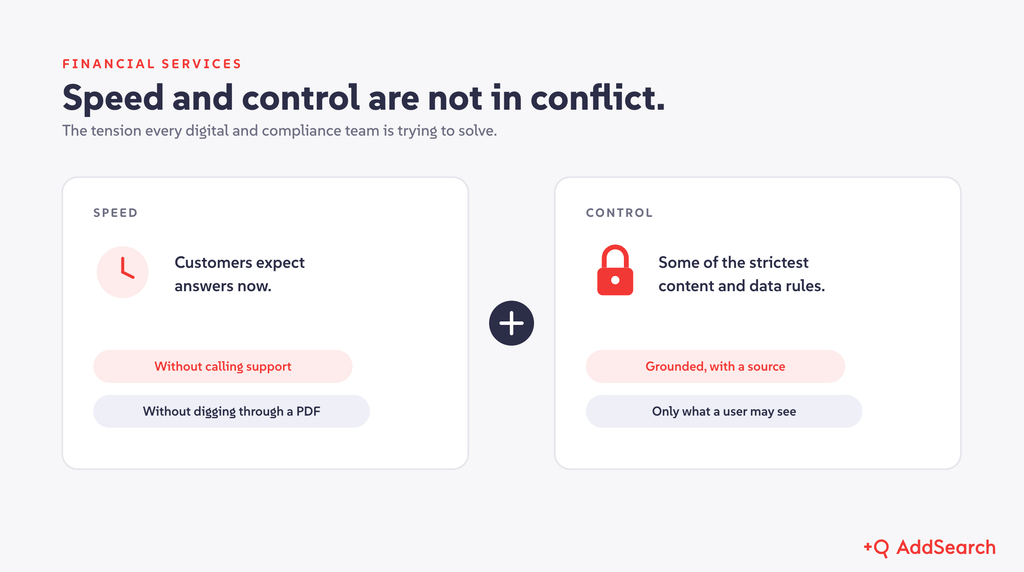
Financial services customers expect answers now. They want to know their coverage details, their account terms, or a specific regulatory disclosure without calling support or digging through a PDF. At the same time, banks and insurers operate under some of the strictest content and data rules of any industry. One wrong answer, one ungrounded AI response, one leaked piece of gated account information, and the cost is not just a bad customer experience. It is a compliance incident.
This is the tension every digital and compliance team in financial services is trying to solve: speed of answers versus control of information. The good news is that these two goals are not actually in conflict. The right search and AI answer layer can deliver both.
Why generic AI answers are a liability in financial services
Most AI chat tools on the market are not built with financial services in mind. They summarize, paraphrase, or generate answers with limited grounding in your actual content, and limited visibility into which content a specific customer is even allowed to see.
For a bank or insurer, that is a serious risk. A customer asking about their policy exclusions, their loan terms, or a product disclosure needs an answer that is grounded in the institution’s own approved content, with a visible source, every time. Anything less opens the door to misinformation, regulatory exposure, and customer distrust.
An answer engine built for this use case works differently. It grounds every response in your own content, cites its sources, and respects who is allowed to see what. That is true whether the question comes from a public visitor on your marketing site or a logged-in customer inside a secure portal.
Public content and gated content need the same answer layer
Banks and insurers typically run two very different content environments side by side: a public-facing marketing and product site, and a secure, authenticated portal where customers manage accounts, claims, and policies. Historically, these have needed separate search tools, separate teams, and separate vendors.
That separation is not necessary anymore. Gated and authenticated content can be indexed through authenticated crawling and API-based indexing rather than waiting on a prebuilt connector for every system in your stack. This means your team is not stuck waiting on a vendor roadmap to support your policy administration system, your claims platform, or your internal knowledge base. You get flexibility and speed instead, with entitlements respected so search never becomes a leak.
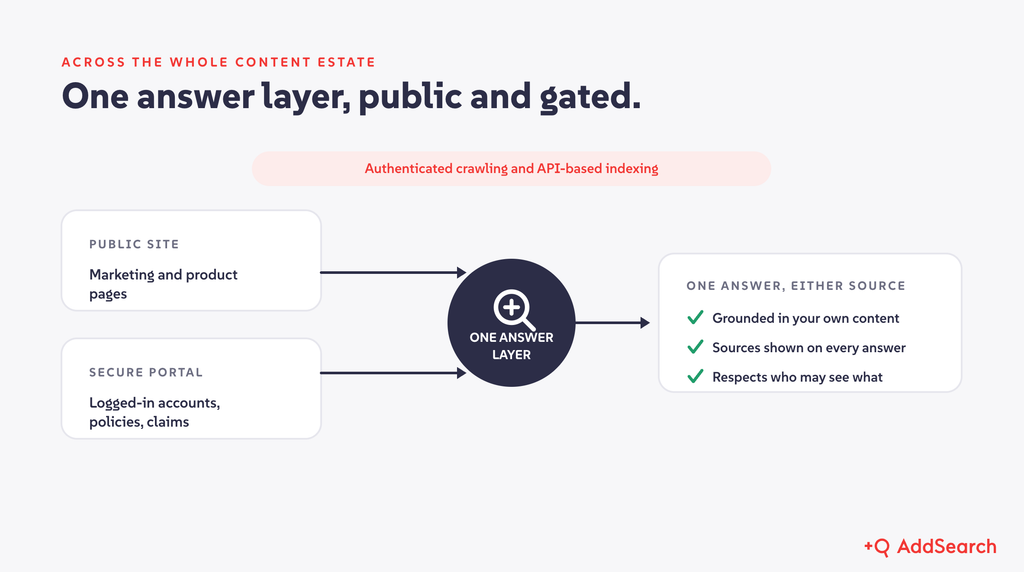
The result is one answer layer across your entire content estate, public and gated, instead of a patchwork of tools that do not talk to each other.
Deploying without a dedicated search team
Financial services IT and digital teams already have full plates: core banking upgrades, fraud systems, regulatory reporting. Standing up a new search infrastructure project from scratch is rarely realistic.
A modern answer engine is designed to be fast to deploy and managed, so your team is not building or maintaining search infrastructure on top of everything else. You can implement yourself using ready-made UI solutions, UI libraries, and APIs, or work with the platform’s team directly. That flexibility matters for financial services specifically, because some institutions want a fully self-serve rollout while others need a security review and a hands-on implementation partner. Both paths should be available, and neither should require a dedicated search engineering hire.
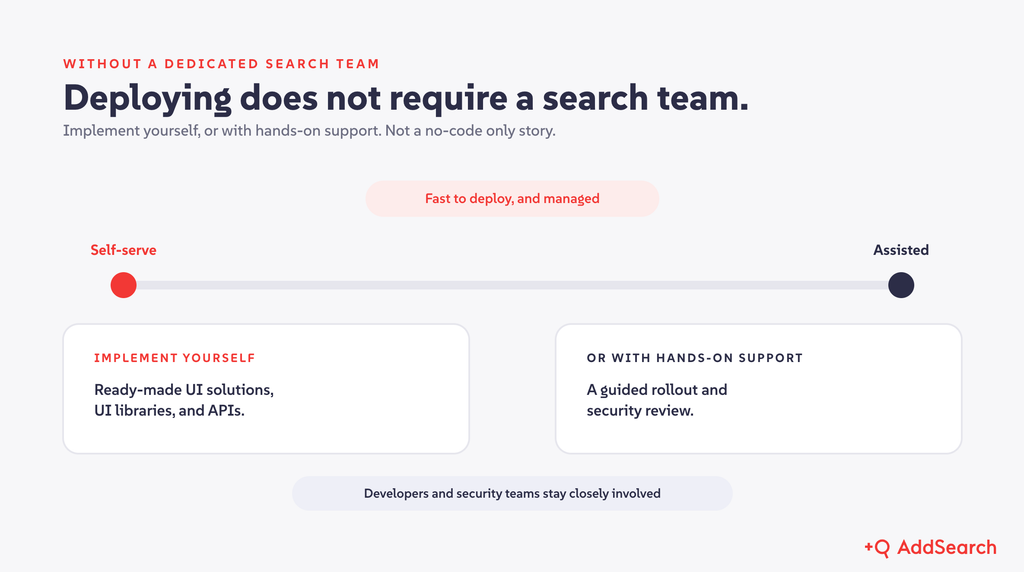
That said, this is not a “no-code only” story. Developers and security teams are usually deeply involved in any financial services deployment, and for good reason. A serious answer engine gives them real technical depth to evaluate: authenticated crawling, API-based indexing, and a documented approach to how entitlements and permissions are enforced at query time.
Compliance and security as a foundation, not an afterthought
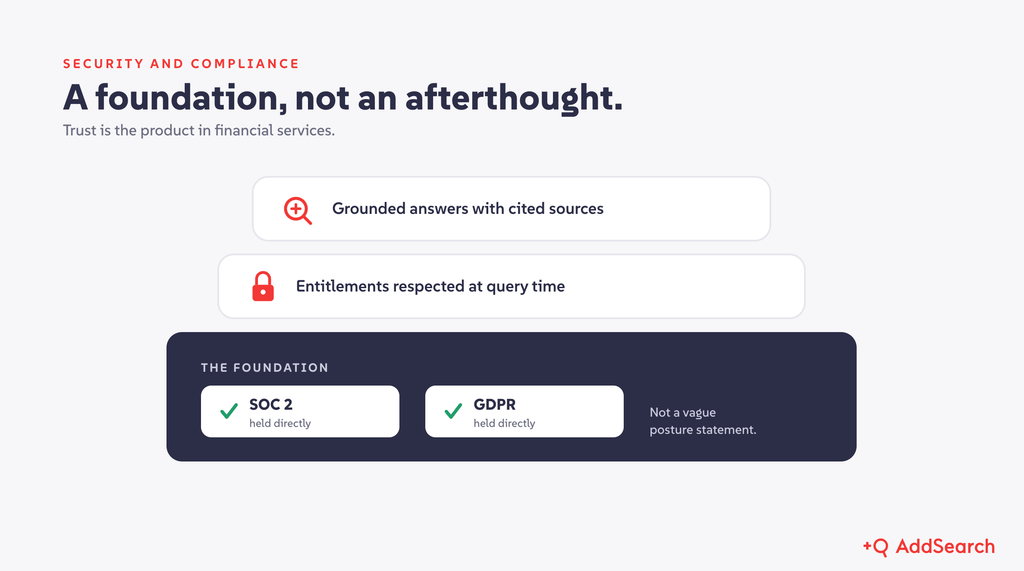
Trust is the product in financial services. Any tool that touches customer-facing content or account data needs to meet a high bar for security and data handling, not just promise to get there eventually.
An answer engine built for regulated industries should hold SOC 2 and GDPR compliance directly, not offer a vague posture statement. That distinction matters when your security and compliance teams are doing vendor due diligence. It is the difference between a tool you can actually deploy behind your authentication layer and one that sits permanently in a review queue.
What this looks like in practice
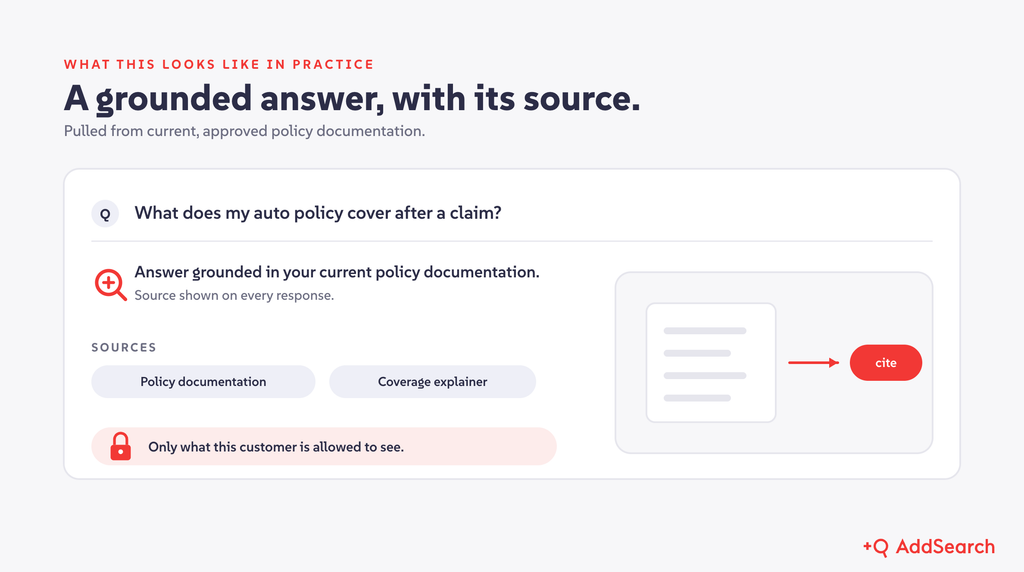
Picture a customer on an insurer’s website asking about what their auto policy covers after a specific type of claim. Instead of a generic chatbot guessing at an answer, or a static FAQ page that has not been updated in two years, the customer gets a grounded answer pulled directly from the current, approved policy documentation, with the source cited. If they log in to check their own claim status, the same answer engine respects their account permissions and only surfaces what they are entitled to see.
That is the shift banks and insurers are working toward: one search and AI answer layer, spanning public and gated content, that gives customers real answers instantly while giving compliance and security teams the control and auditability they require.
This is the model AddSearch is built for. One platform indexes public and gated content through the same authenticated crawling and API-based indexing, so the marketing site, the help center, and the authenticated policyholder or banking portal all sit behind one answer layer.
Every AI answer is grounded in your own approved content with cited sources, and entitlements are respected at query time so a customer only ever sees what they are allowed to see. AddSearch holds SOC 2 Type II and GDPR compliance, and deeper security and data-residency questions route to the Trust Center. Live in days, with no dedicated search team required.
The takeaway
Speed and compliance are not opposing goals for banks and insurers building better digital self-service. The institutions that get this right are not choosing between a fast customer experience and a safe one. They are deploying an answer engine that grounds every response in their own approved content, respects entitlements across public and gated environments, and meets the security bar their compliance teams already require.
If you are evaluating how to give customers instant, accurate answers without introducing compliance risk, the place to start is an audit of your current content and search experience, not a leap of faith on an unproven chatbot. See how one answer layer handles your public and gated content together. Book a personalized demo now.
